Subject file
Education News
Education News covers the commercial side of learning technology: vendor funding and results, pricing changes, mergers, procurement rules, and the budget cycles determining when schools can buy anything. Reporting connects corporate decisions to classroom availability. For administrators, suppliers and analysts following where education money moves.
Education News
Under federal law there are four tiers of evidence, and most sales decks are quoting tier IV — the tier that means 'a logic model.'
By Marta Kowalczyk • August 28, 2026
Education News
A 2007 federal practice guide gave testing-based study strategies its strongest evidence rating, but newer classroom studies show the real gains are smaller and more subject-dependent than professional-development slides suggest.
By Marta Kowalczyk • August 17, 2026
Education News
Federal law never says a classroom app can have student data by default. A narrow exception does the work, and a wave of new state laws is now building stricter rules on top of it.
By Marta Kowalczyk • August 10, 2026
Education News
Per the Pilot-to-Purchase research on K-12 pilots, most pilots never convert — and the reasons are structural, not product-quality problems.
By Zara Nasser • August 5, 2026
Education News
Districts that replace publisher courses with OER cut textbook spending sharply — but the honest accounting includes curation, printing, and the salaries behind the swap.
By Zara Nasser • July 14, 2026
Education News
Emergency relief money built a tutoring industry in record time; the wind-down shows what districts keep, what evaporates, and what the next funding cliff teaches.
By Marta Kowalczyk • June 21, 2026
Education News
E-rate discounts of 20 to 90 percent pay for most of the connectivity and Wi-Fi in US schools, and its rules shape what districts can buy and when.
By Victor Petrov • May 29, 2026
Education News
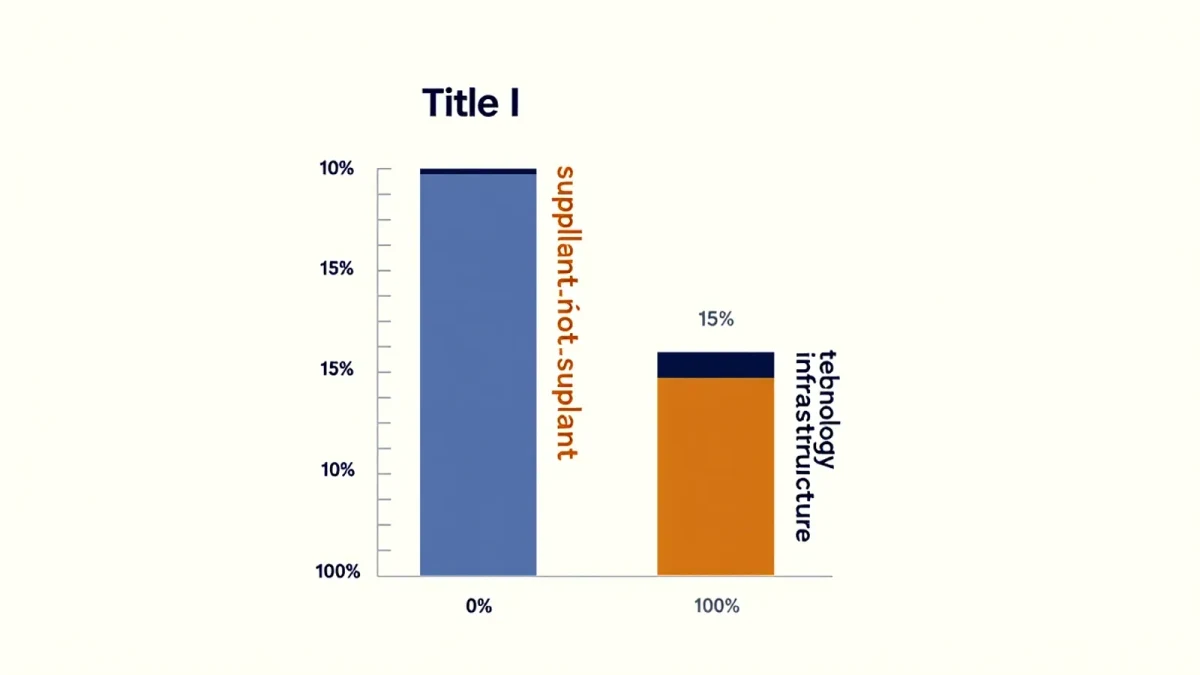
Title I, Part A carries no percentage cap on device and software purchases, but supplement-not-supplant rules and the Title IV-A 15 percent cap decide what actually survives an audit.
By Victor Petrov • May 6, 2026
Education News
The Every Student Succeeds Act turned «evidence-based» into a purchasing requirement — and marketing language that sounds like proof but often isn't.
By Zara Nasser • April 14, 2026
Education News
The first-year discount was real; so is the renewal quote, and the gap is built into how education software is priced, sold, and budgeted.
By Victor Petrov • March 22, 2026